
Colosseum information
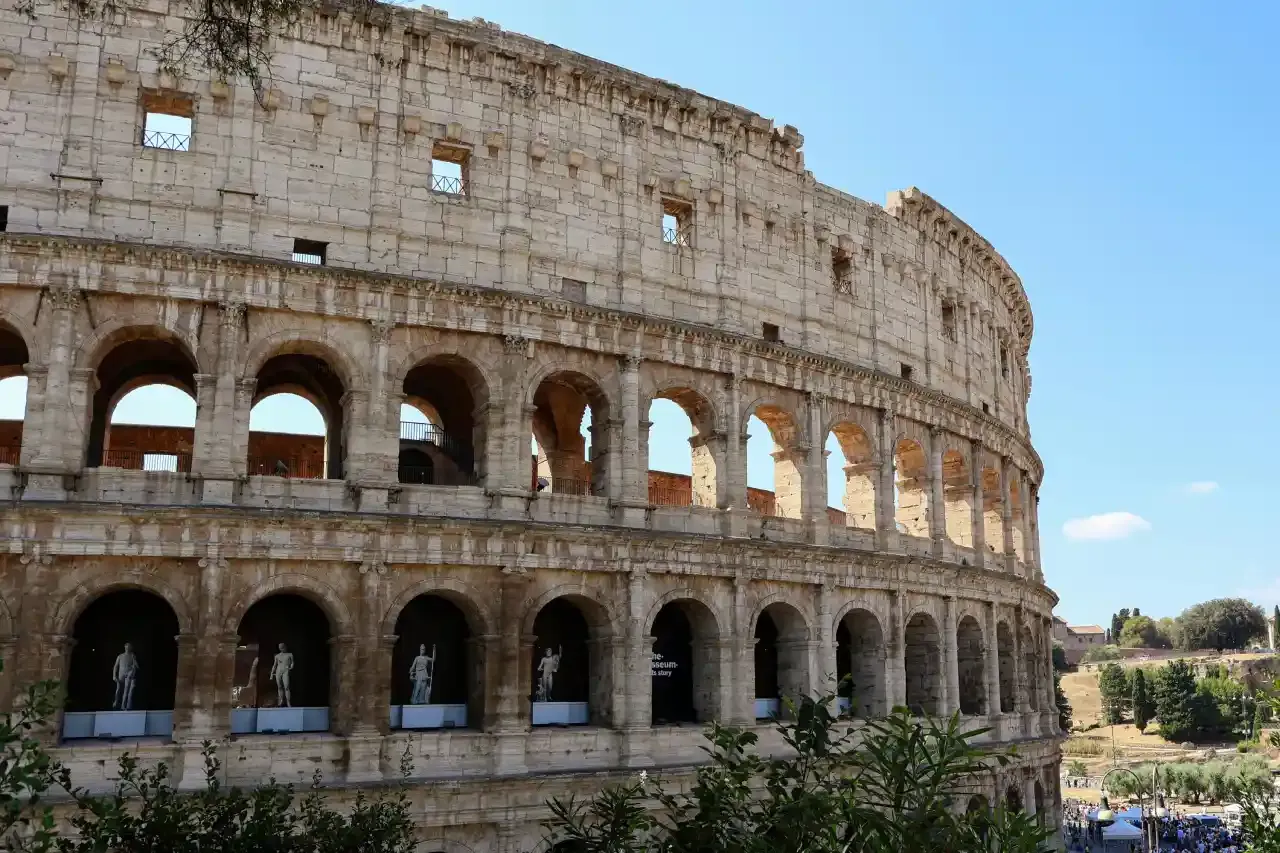
The Colosseum is an oval amphitheatre found in the heart of Rome, Italy. It’s a freestanding structure made of stone and concrete, unlike its predecessors that were built into hillsides to provide adequate support. It’s three stories of arched entrances and supported by semi-circular columns. Each story has columns of different styles.
Support when you need it
Our team ensuring that your experience with us is as smooth and enjoyable as possible.
Fast and online booking
Choose the best option for your needs and preferences and avoid the lines booking here.
Top attraction in Rome
The Colosseum is an iconic landmark, a piece of history, and a testament to Roman engineering.
Visit the Colosseum
Travel back to ancient Rome by visiting the Colosseum, an iconic man-made monument that consists of an oval amphitheatre, the Romans main entertainment center commissioned by the emperor Vespasian, and completed under his successor and heir, Titus. To help them forget their daily struggles and satisfy their primal needs to witness fights until the death, animal hunts and other spectacles.
History of the Colosseum
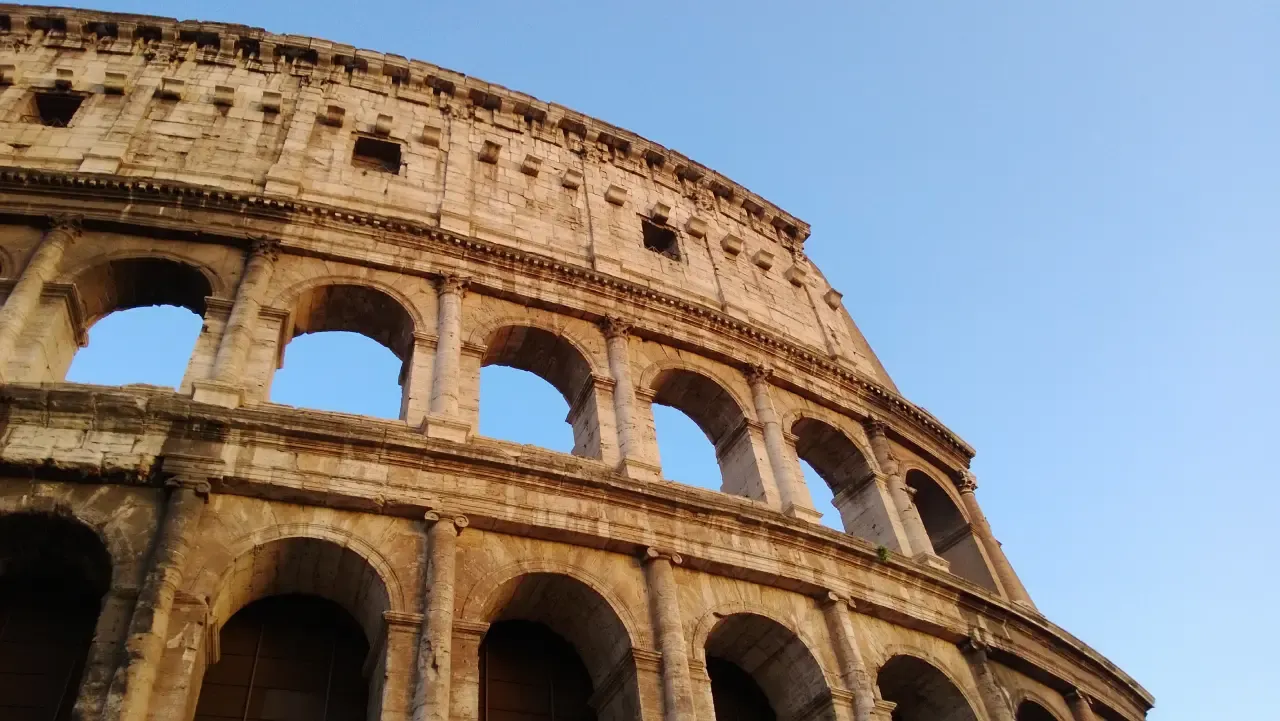
History of the Colosseum
During its golden age it could receive between 50,000 and 80,000 spectators, and it was the largest amphitheatre built at the time in 80 AD, but construction began 8 years prior in 72 AD. The main purpose of the Colosseum was to entertain the people of Rome with different spectacles like contests between gladiators, mock sea battles, animal hunts, executions, famous battles reenactments, and dramas from Classical mythology. These shows were witnessed up until the medieval era. Later on the Colosseum would be used for housing, workshops, and other uses as well.
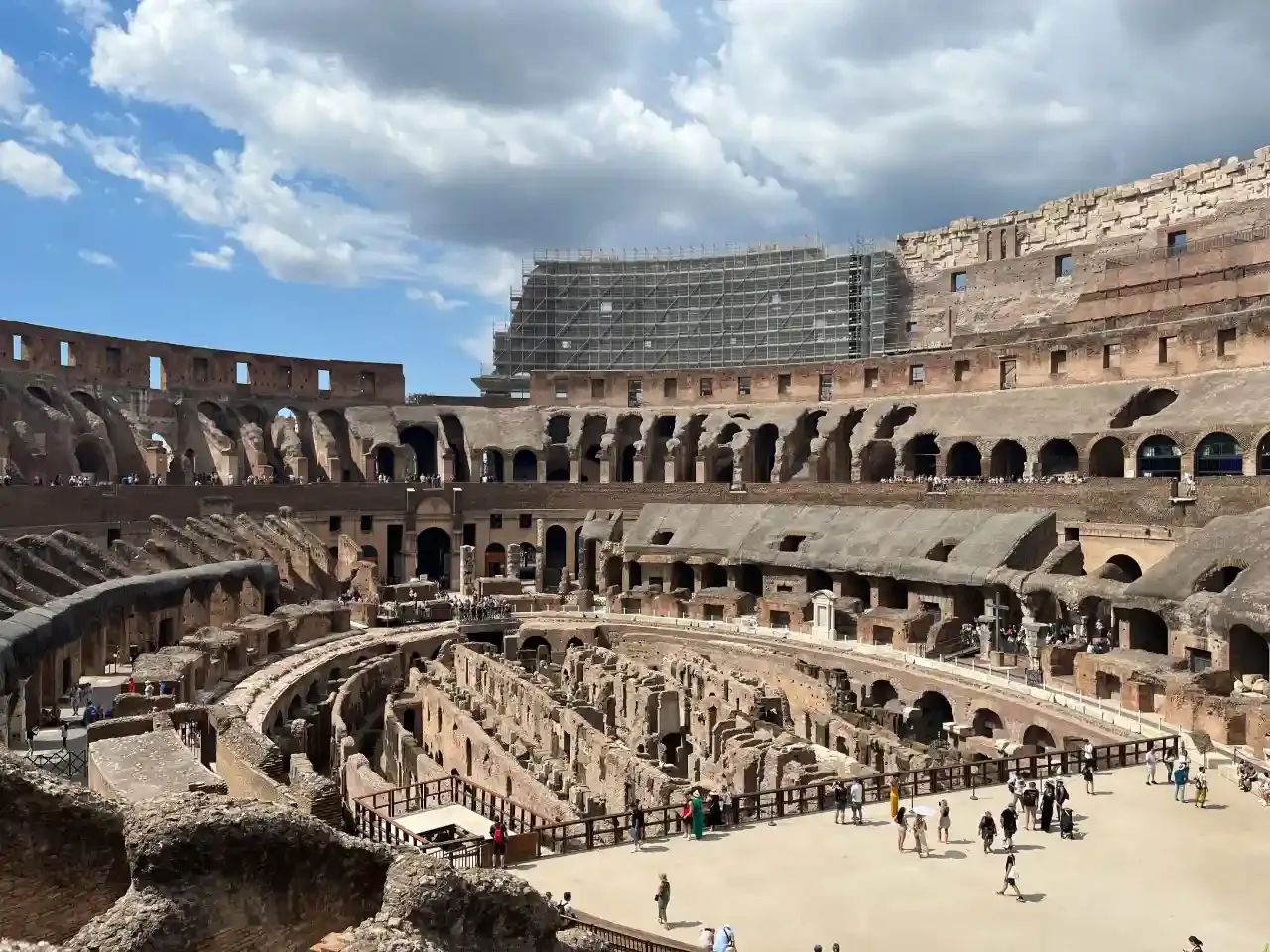
Parts of Colosseum
The main feature of the Colosseum is its arena, the space were the action took place. Battles between gladiators, animal executions, dramatic plays and battle reenactments were witnessed there. Then the hypogeum was created, built 10 years later the inauguration, which is the substructure of the Colosseum that allowed the arena to have naval battles.
Arch of Constantine
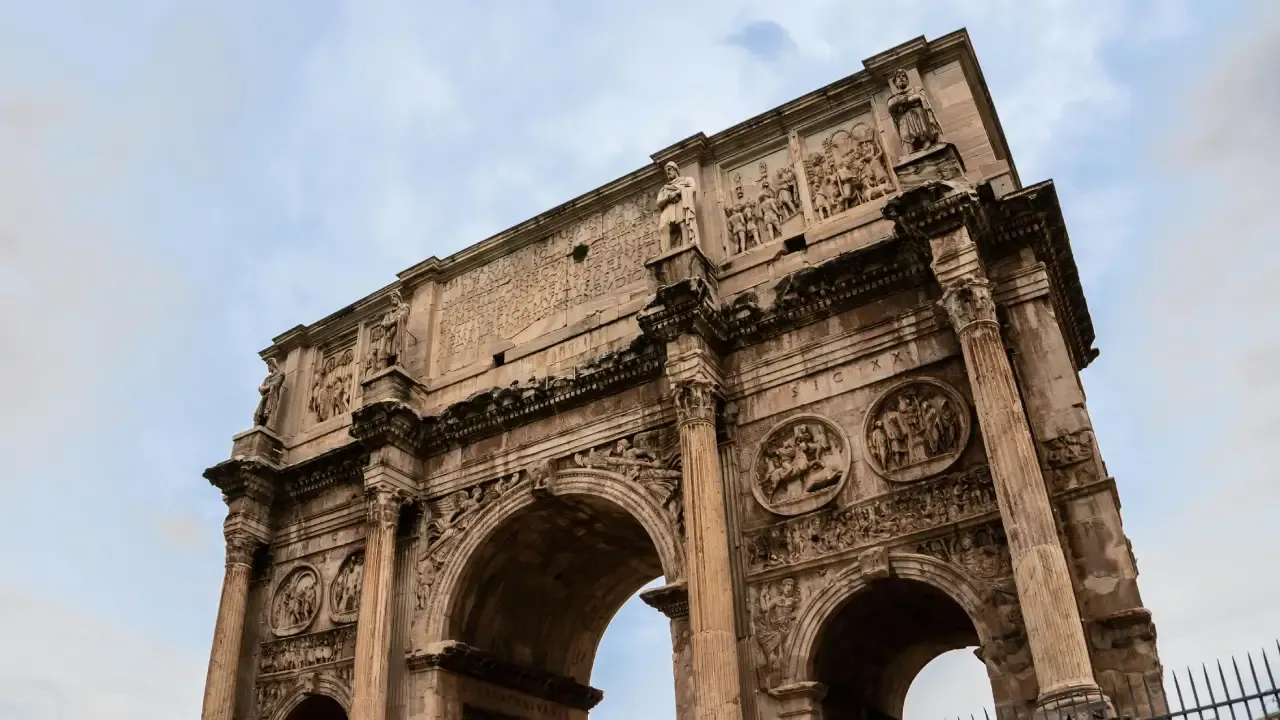
Arch of Constantine
The Arch of Constantine stands between the Colosseum and the Palatine Hill. It was commissioned by the Roman Senate to commemorate Roman Emperor Constantine's victory over the Roman tyrant Maxentius at the battle of Milvian Bridge in Rome. It's the only Roman triumphal arch that still stands today and the last great monument of Imperial Rome.
The arch is also a statement of political propaganda, stating that Constantine was one of the most successful Roman emperors, known best for their many military victories and good government. The location spanned the ancient route for Roman triumphs at its origin, where it diverged from the Via sacra. This route was taken by the emperors when they marched into the city after a military victory.
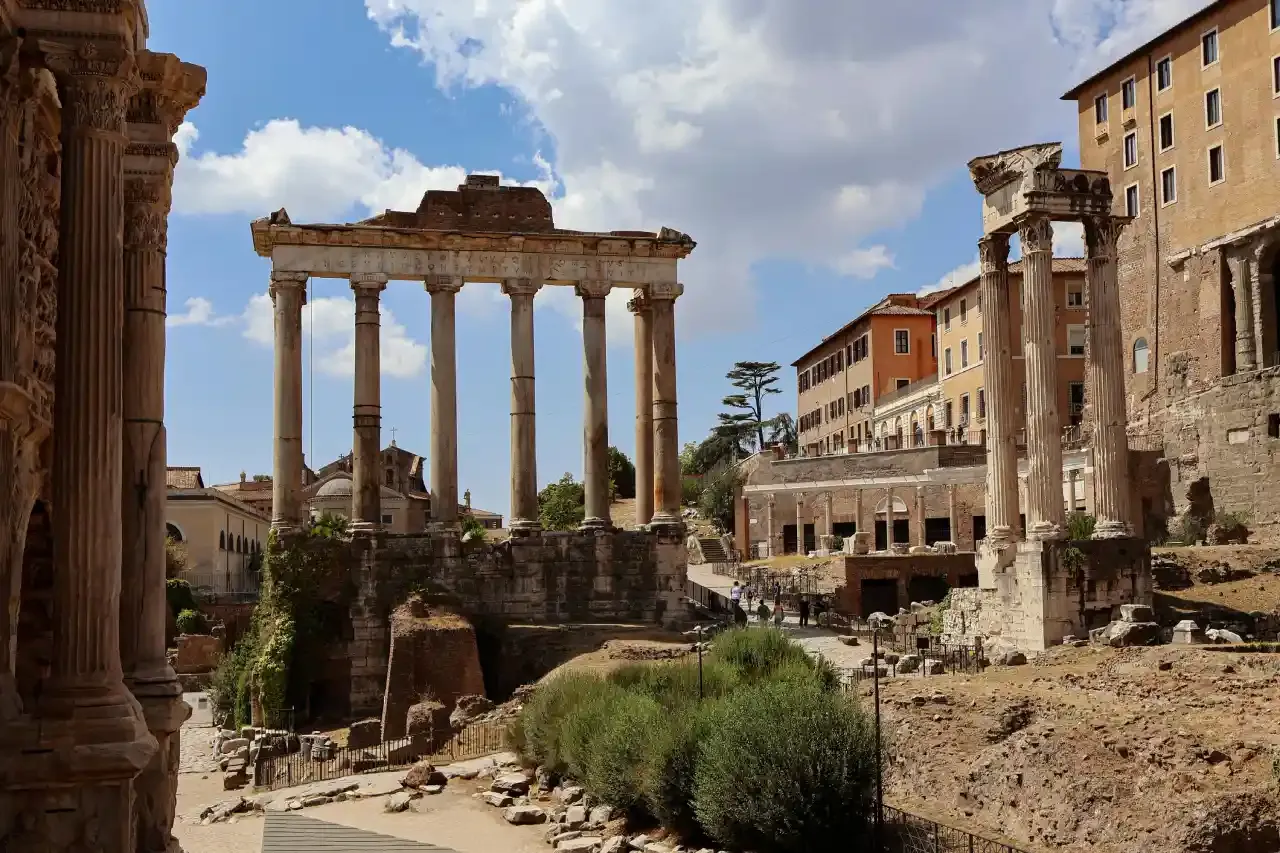
Roman Forum
The Roman Forum is located east of the Colosseum. It was ancient Rome's main plaza in the center of the city, and surrounded by government buildings. This was Rome's most busy place – aside from the Colosseum – that was filled everyday with people on their day to day commercial affairs, also the spot for elections, public speeches and triumphal processions (civic and military processions to celebrate victories and religious rites) were celebrated. It was also a very popular venue to see gladiatorial battles up-close, front and center.
Palatine Hill
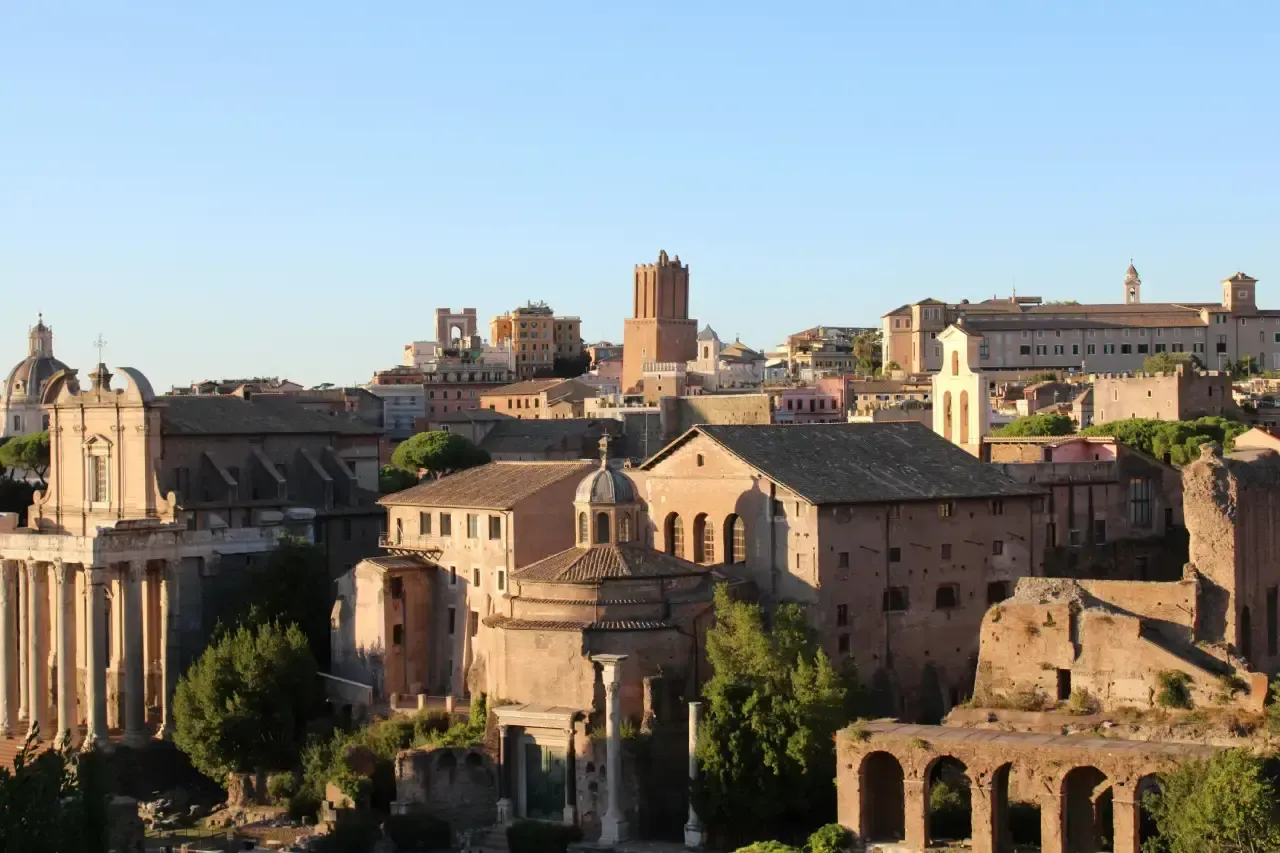
Palatine Hill
The Palatine Hill stands 40 metres above the Roman Forum. It's the centremost of the seven hills of Rome and is considered the “first nucleus of the Roman Empire”. Because it was mainly a residential hill were the rich and wealthy lived in their fancy houses and palaces.
What stands today are mostly ruins of what used to be Rome's suburbs. We recommend to tour the Palatine Hill with an expert guide to really get a grasp on what it represented for Rome then and how it helped shape the world's future in politics and economy as well.
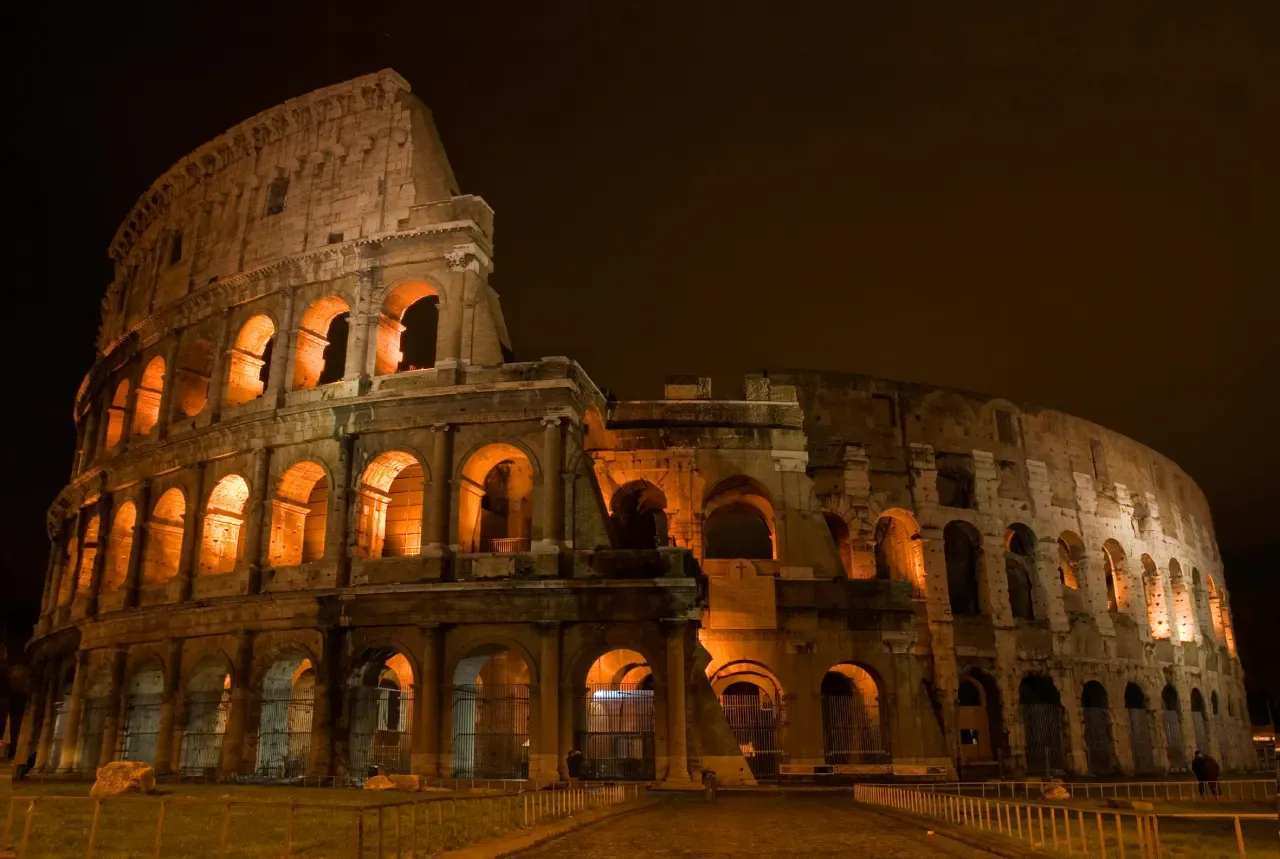
Colosseum at night
Now, there is a special tour available for tourists to visit the Colosseum at night which gives you a different perspective on this monument. It will allow you to walk through the corridors -completely empty!- and get a chance to truly admire the architecture and ingenuity that took to build the Colosseum.
Facts about Colosseum
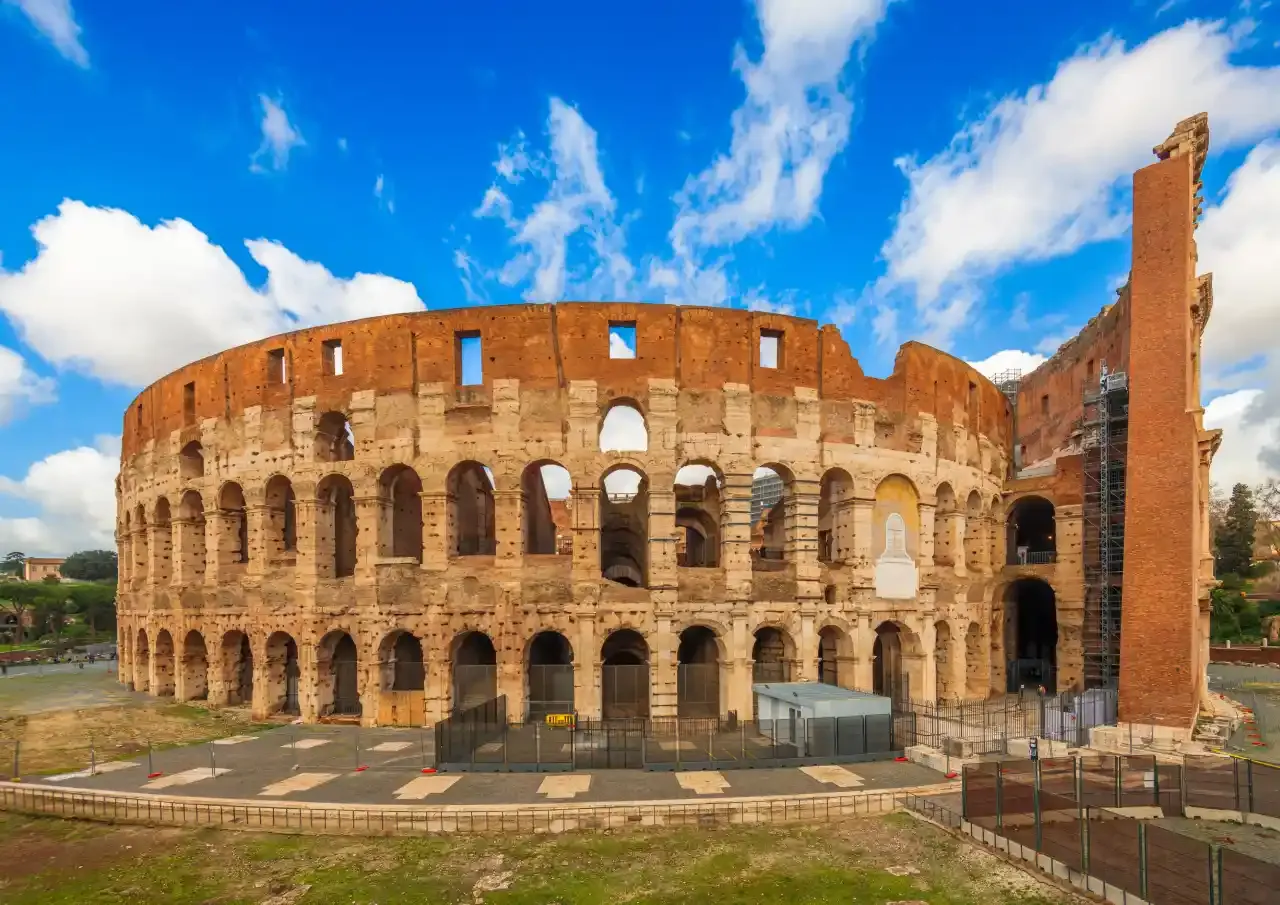
Facts about Colosseum
The Colosseum is one of ancient Rome’s must see attractions. It’s an oval amphitheatre that welcomed between 50,000 and 80,000 Roman spectators for several centuries. Battles between gladiators, animal executions, dramatic plays, and even naval battles (thanks to the hypogeum installed 10 years later) were the Colosseum’s main events entertained the masses. Did you know that over 9,000 animals and 2,000 people were killed during 100 days of conquests to mark the Colosseum’s inauguration in 80 AD?
Practical tips for your visit
Understanding the logistics and history of the Flavian Amphitheatre helps you appreciate the scale of this ancient landmark. Beyond its fame as a venue for combat, the structure represents a peak in Roman engineering, featuring a complex system of elevators and trapdoors known as the hypogeum.
To optimize your visit, consider the following practical tips:
- Book in advance: You must reserve your tickets online weeks ahead of time, as daily capacity is limited and slots sell out quickly.
- Arrive early: You should reach the security checkpoint at least 30 minutes before your scheduled entry to account for mandatory bag checks.
- Wear comfortable shoes: You will encounter uneven stone paths and steep stairs across the three archaeological sites, making sturdy footwear essential.
- Bring a water bottle: You can find several public fountains, known as nasoni, inside the park to refill your bottle with fresh, cold water for free.
- Validate your ID: You need to carry an original passport or a valid ID card, as staff often check the name on your ticket against your official documents.
Following these guidelines ensures you focus on the history and architecture rather than the logistical challenges of one of the world's most visited sites.