
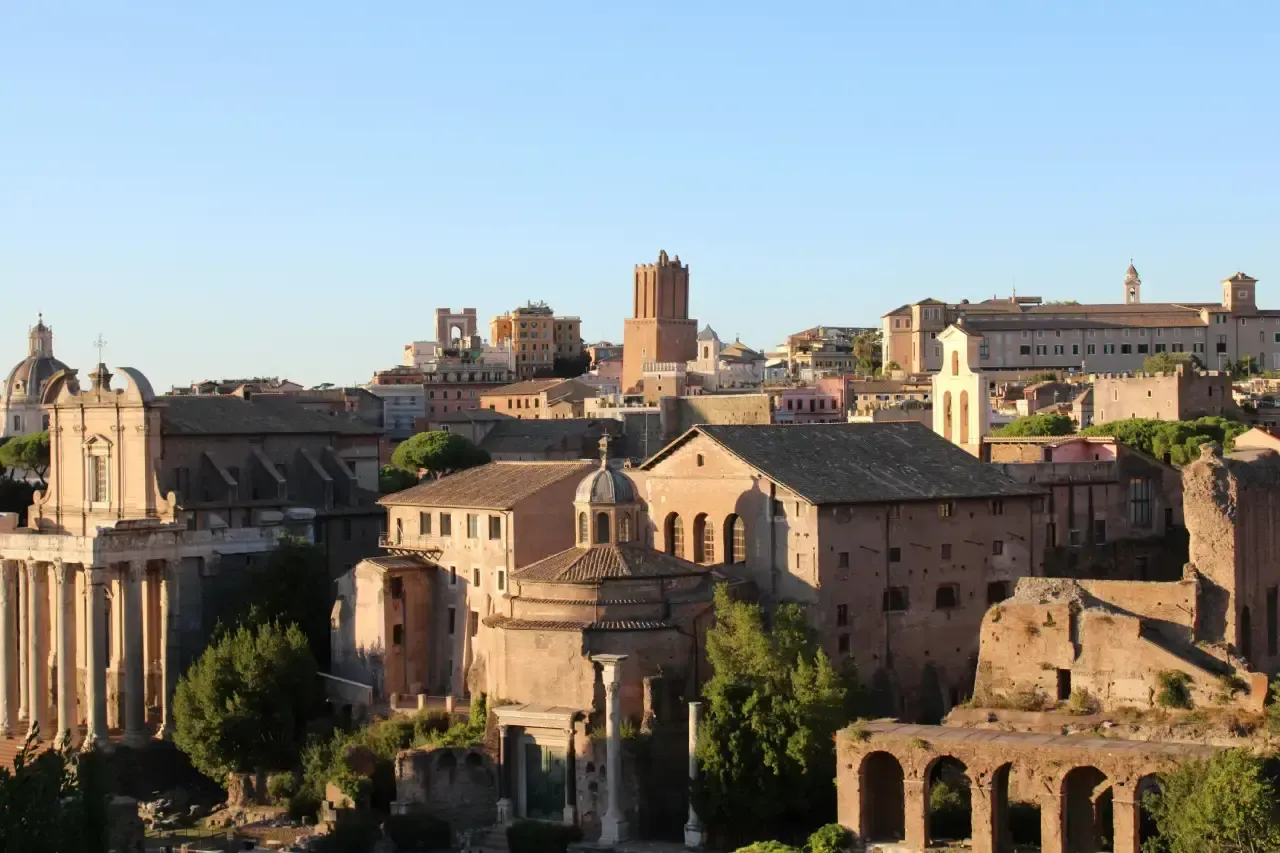
Palatine Hill
The Palatine Hill is located near the Colosseum and the Roman Forum. It’s also walking distance from the Circus Maximus and Piazza Venezia so you have zero excuses to not going and see it by youself!
Support when you need it
Our team ensuring that your experience with us is as smooth and enjoyable as possible.
Fast and online booking
Choose the best option for your needs and preferences and avoid the lines booking here.
Top attraction in Rome
The Colosseum is an iconic landmark, a piece of history, and a testament to Roman engineering.
History of Palatine Hill
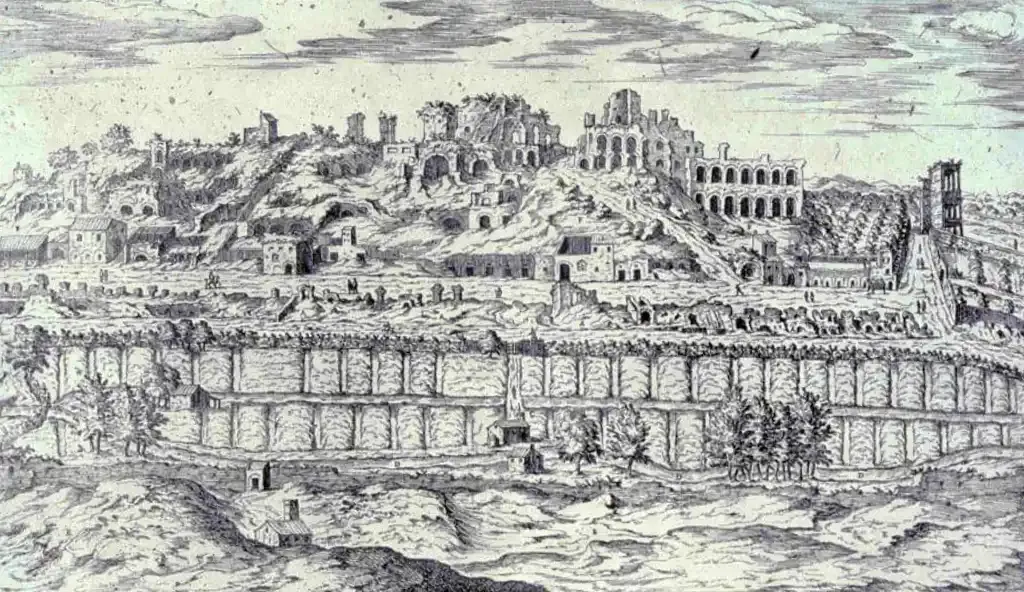
History of Palatine Hill
The Palatine Hill is one of Rome’s most ancient parts of the city and has been known as “the first nucleus of the Roman Empire”. Located on the centermost of one of the seven hills, it’s 40 metres tall and is composed of a line of houses that were mainly occupied by wealthy men and nobles from ancient Rome. Completed with a privileged view of the Roman Forum and the Colosseum, emperors and kings where the main occupants of the most prestigious buildings in Rome and where they hosted many feasts and gatherings that would shape the future on Roman Empire and it’s later conquest.
Excavations show that people have lived there since the 10 century BC, were a collection of huts have been uncovered and believed to have been used for funerary purposes between the 9th and 7th century BC, close to the time period.
What to look for in Palantine Hill?
The must-see sights through the Palatine Hill are:
- The Palatine Museum: this site museum houses a collection of ancient artifacts discovered during excavations on the hill, ranging from primitive Iron Age pottery to exquisite imperial sculptures.
- The Palatine Palace: this massive imperial complex served as the primary residence for emperors for centuries. It includes the Domus Flavia, used for official state ceremonies, the Domus Augustana, which functioned as the private residential wing for the rulers, and the Stadium of Domitian, an expansive sunken area that likely served as the emperor's private garden.
- The House of Augustus and House of Livia: these prestigious residences feature remarkably well-preserved frescoes. As these sites have restricted access, tickets must be purchased in advance. Nearby, you can also find the remains of the Temple of Apollo, built by Augustus to honor his patron god.
- The Farnese Gardens: created in the 16th century, these lush Renaissance gardens were built over the ruins of the Palace of Tiberio. They offer shaded pathways, citrus trees, and some of the most iconic panoramic views of the Roman Forum below.
- View over Circus Maximus: From the southern edge of the Palatine ruins, visitors can enjoy the most spectacular panoramic view of the Circus Maximus, the ancient chariot-racing stadium located in the valley below.
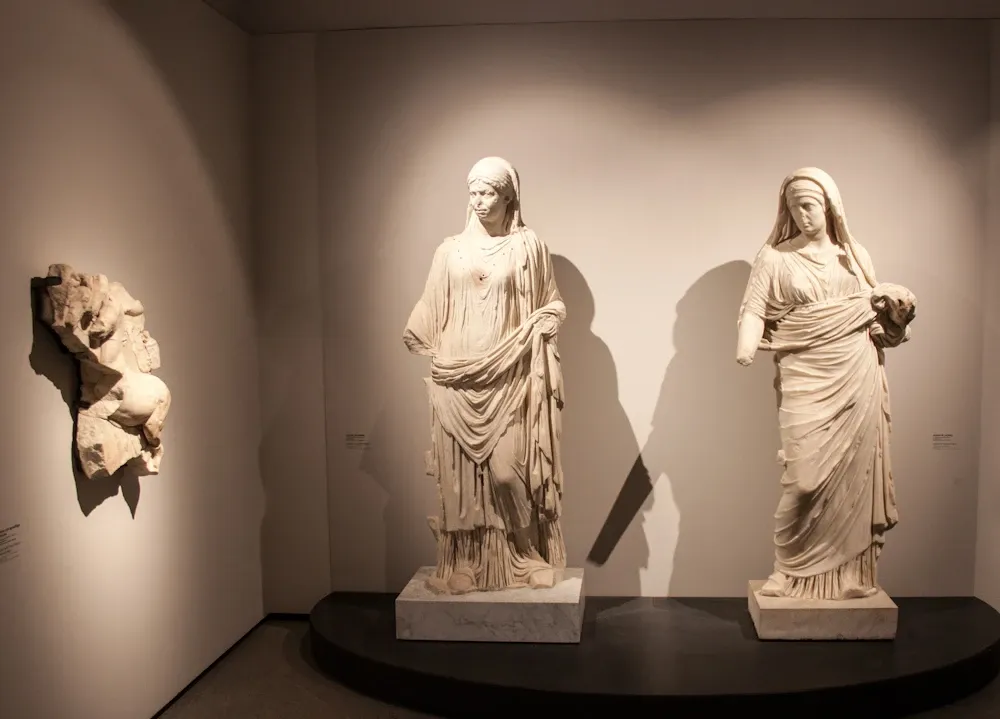
The Palatine Museum
The Palatine Museum is located where the former Monastery of the Visitation used to be, built in 1868 on the ruins of Domitian’s palace. The layout is divided into two floors. The ground floor has rooms that preservate the original structures of the pre-existing domus, and it narrates the history of the Palatine Hill starting from the origins of Rome up until the advent of the Principate (1st century BCE).
On the first floor, you will find many works on display and you shouldn’t miss in Room VI, the findings from the age of Augustus, the emperor that first changed the appearance of the Palatine and in Room VII, you can see the mosaics and fine paintings from the Domus Transitoria.
Photo: "Interior in the Palatine Museum, Rome" by Szilas.
The Palatine Palace
The largest building that you will find on the Palatine Hill is the Palace of Domitian. This wide complex served as the official residence for Roman Emperors over 300 years. The construction of the Palace of Domitian was completed in 92 AD by the Emperor Titus Flavius Domitianus, but later it was expanded by Septimius Severus.
The palace consisted of three different parts that allowed Domitian to separate his business and personal life as well. The three parts were the Domus Augustana, Domus Flavia, and the Stadium of Domitian. The sheer size of the ruins give you a look on how grand and elegant the palace used to be.
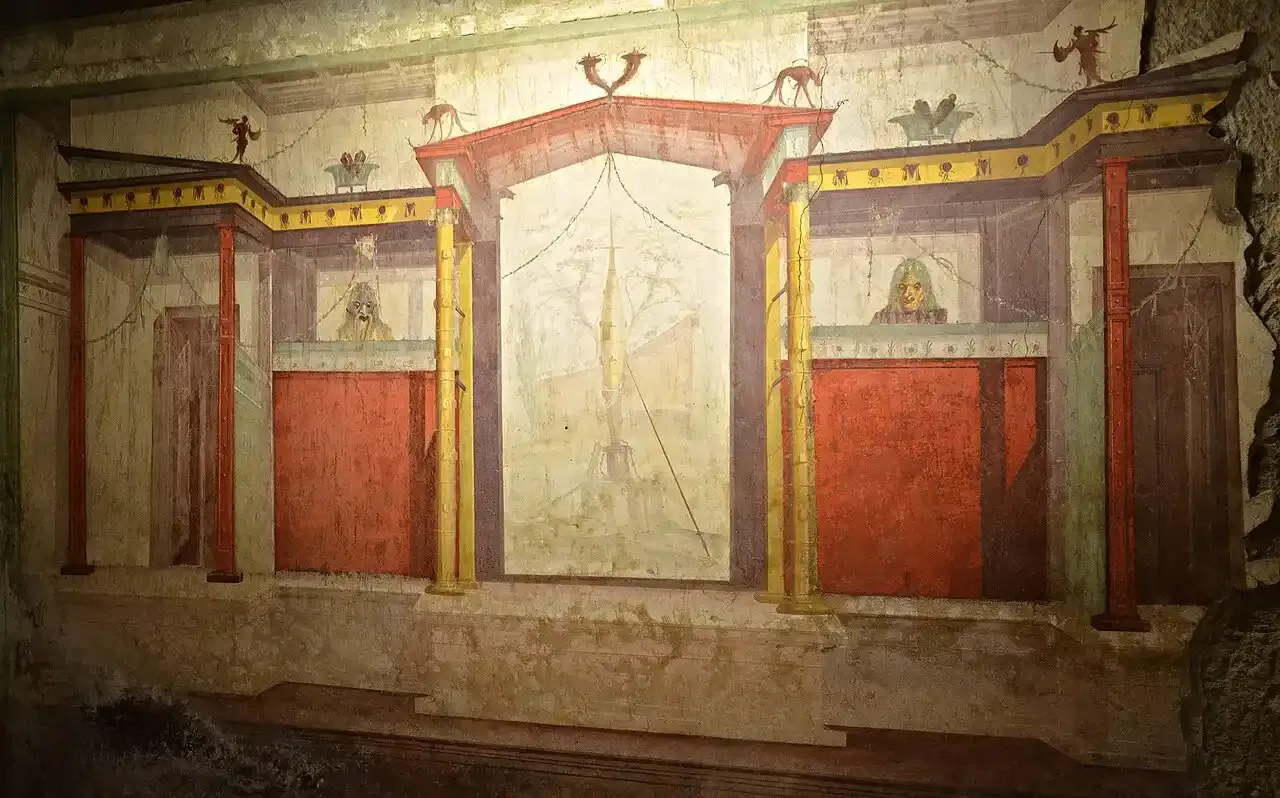
The House of Augustus
The House of Augustus (Domus Augusti in Latin) is the first major building you will find when entering the Palatine Hill and get your impression on ancient Rome. This house has been identified as the primary residence of Augustus, the first Emperor of Rome. It is a symbol of an important transition in Roman history, when the Palatine Hill was turned from a residential place into the seat of Imperial power.
Photo: “House of Augustus (Domus Augusti), South wall of the Mask Room, 2nd Pompeian style, Palatine Hill, Rome” by Butko.
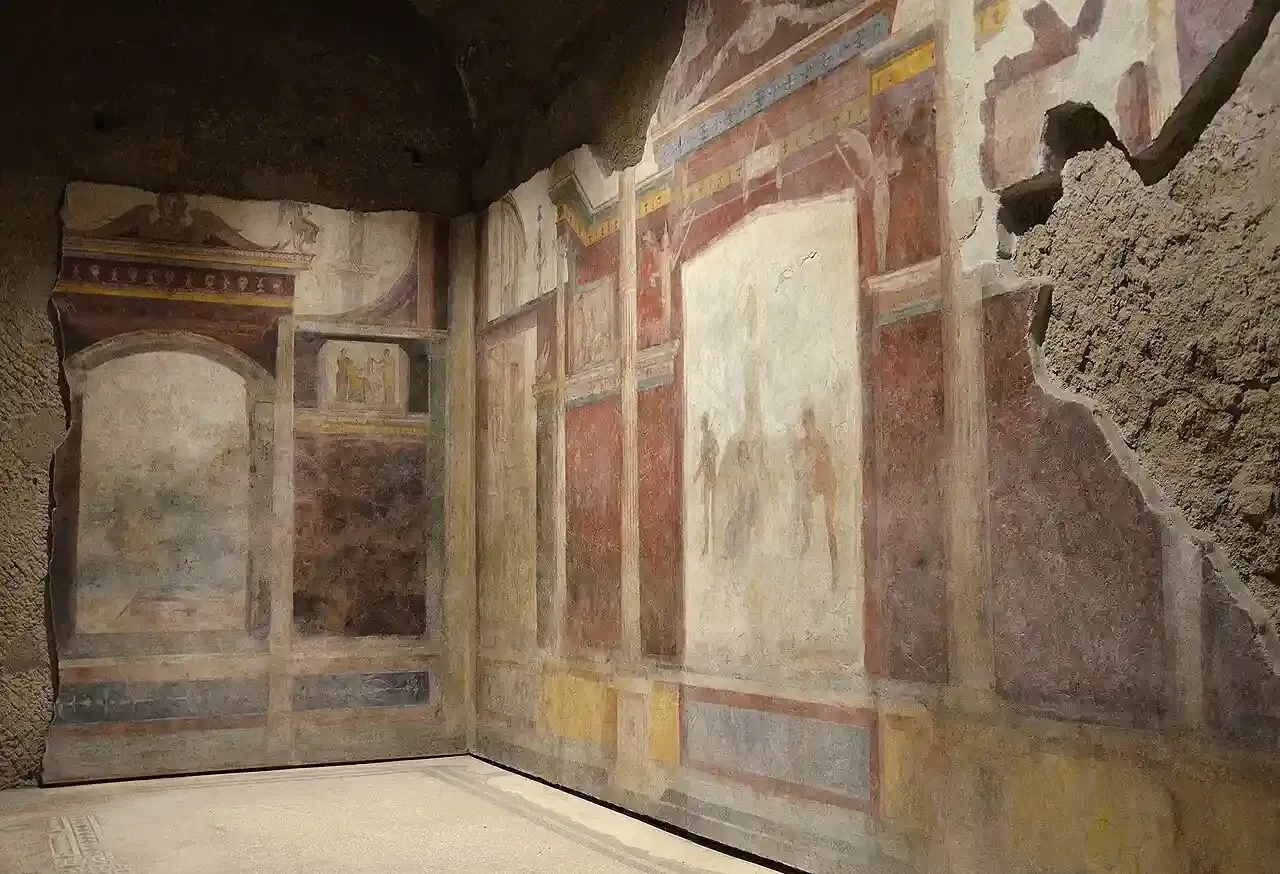
The House of Livia
The House of Livia is a rich and private domus from the 1st century BC, discovered in the 19th century, and it has been attributed to Livia because of the name Iulia Augustua that was found engraved in a lead pipe visible in the reception room. The building structure is made of a quadrangular atrium surrounded by four spaces with painted walls and mosaics floors, dated to 30 BC.
Photo: “The tablinum with the mythological scenes in the center of both walls, House of Livia, Palatine Hill, Rome” by Butko.
The Temple of Apollo
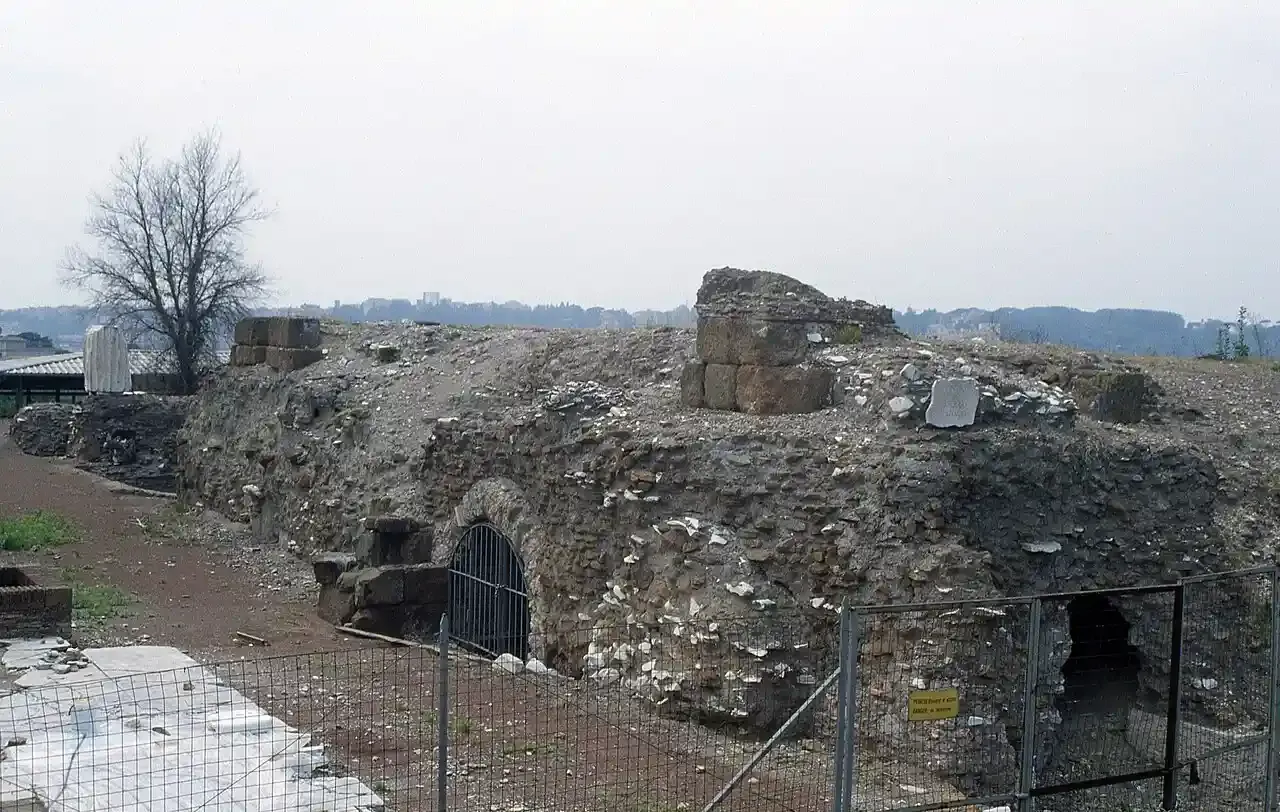
The Temple of Apollo Palatinus was a temple located on the Palatine HIll built in ancient Rome. First dedicated by Augustus to his patron god Apollo. It was the second temple built in Rome dedicated to the god, after the Temple of Apollo Sosianus. The ruins of the building were excavated in the 1960s, in an sloped area going down towards the Circus Maximus.
Photo: “Rome, Palatine. Podium of the Temple of Apollo Palatinus” by Choliamb.
The Farnese Gardens
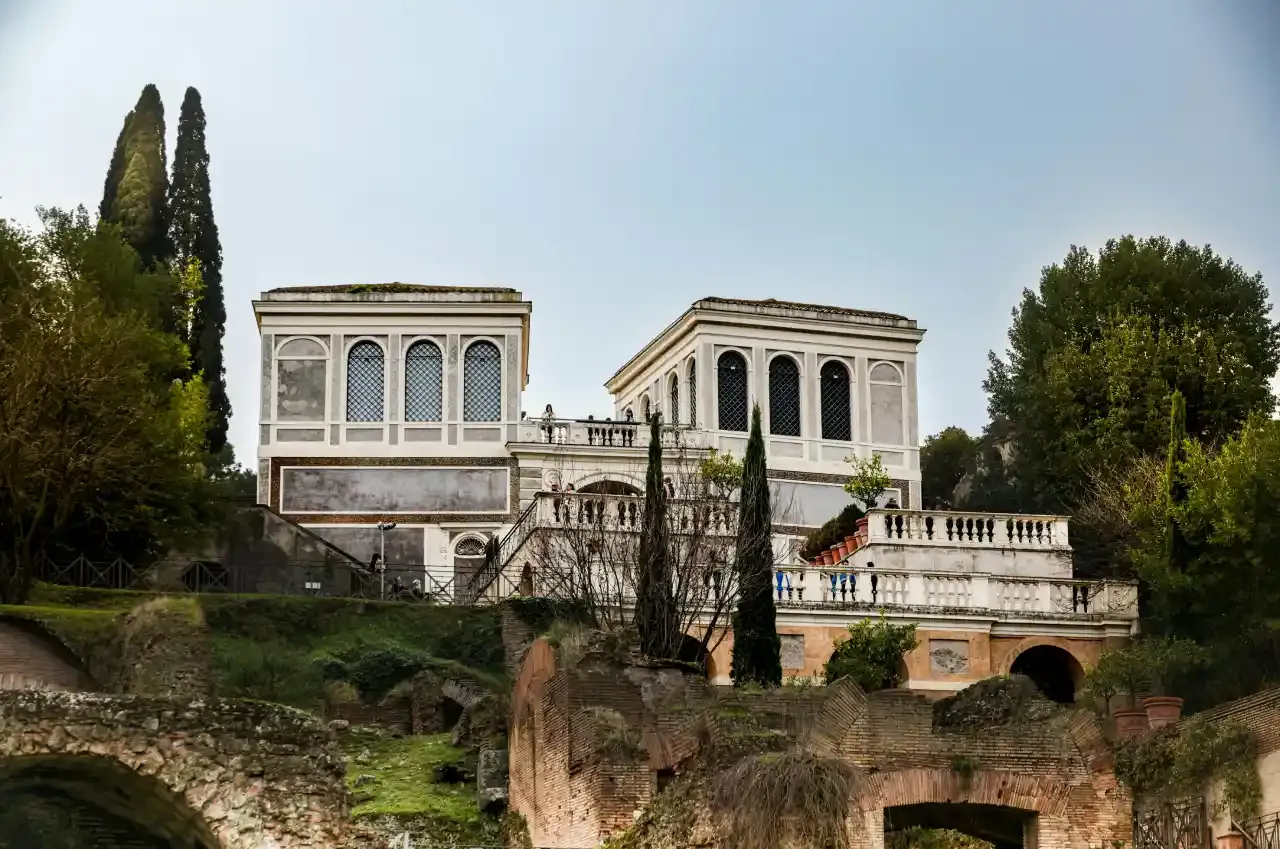
The Farnese Gardens are laid out in terraces on the side of the the Palatine Hill. These magnificent botanical gardens, one of richest in the world during the time period, once extended across the flat top of the hill. They were created by Cardinal Alessandro Farnese and were the first private botanical gardens in Europe.
Established in 1550 over the ruins of the Tiberian palace, the site features aviaries, fountains, and diverse plant species. The design incorporates staircases connecting different levels of the hillside. Architect Giacomo Barozzi da Vignola directed the initial construction for the Farnese family. Today, the area functions as an archaeological park, providing views of the Roman Forum located below.
The Circus Maximus Stadium
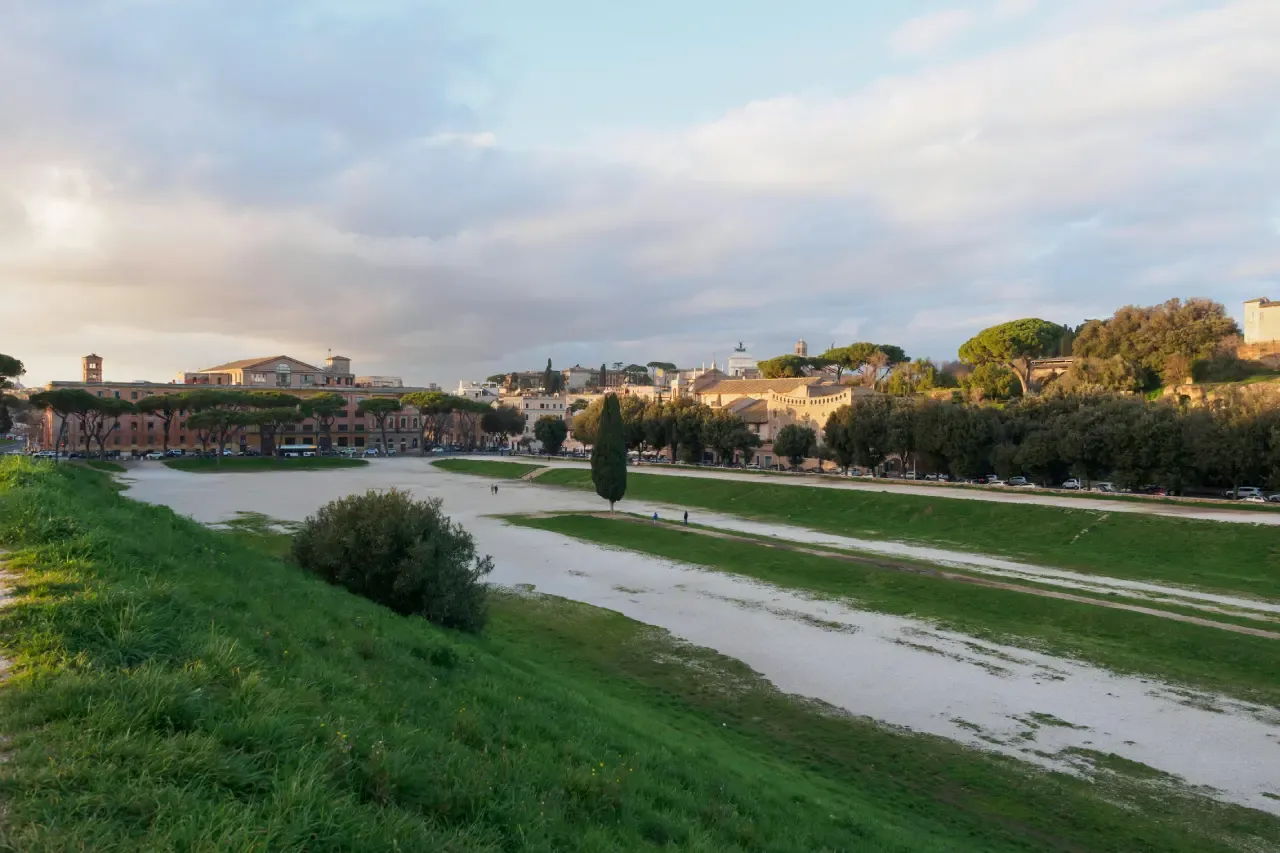
The Circus Maximus is an ancient Roman chariot-racing stadium and mass entertainment venue located between the Aventine and the Palatine Hill. It was the first and biggest stadium built in ancient Rome.
Measuring 621 meters in length and 118 meters in width, the structure accommodated approximately 150,000 spectators. The track featured a central barrier called the spina, which held stone obelisks and lap counters. Constructed during the sixth century BC, the facility underwent expansions under Julius Caesar and later emperors.
Some tips to make your visit more comfortable
Consider the following tips when sightseeing:
- Bring a packed lunch and make most of the shade.
- There a drinkable fountains (nasoni) all along the way, so don’t forget your bottle to refill.
- Wear comfortable sneakers (the terrain is steep and uneven).
- Use sun protection, including a hat, sunglasses, and sunscreen.
- Visit early or late in the day to avoid peak heat and crowds.
- Enter via Via di San Gregorio for shorter security lines.
- Download an offline map to navigate the sprawling ruins easily.
- Budget at least 1 hour just for this hill.