
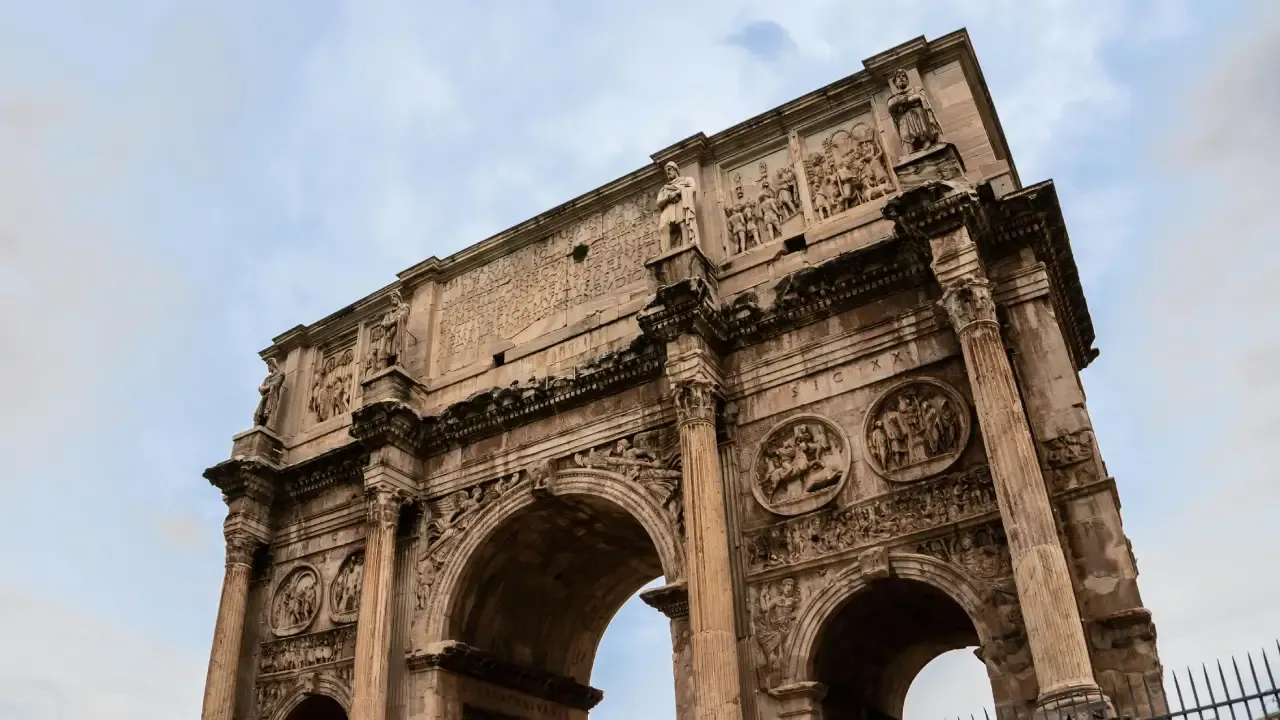
Arch of Constantine
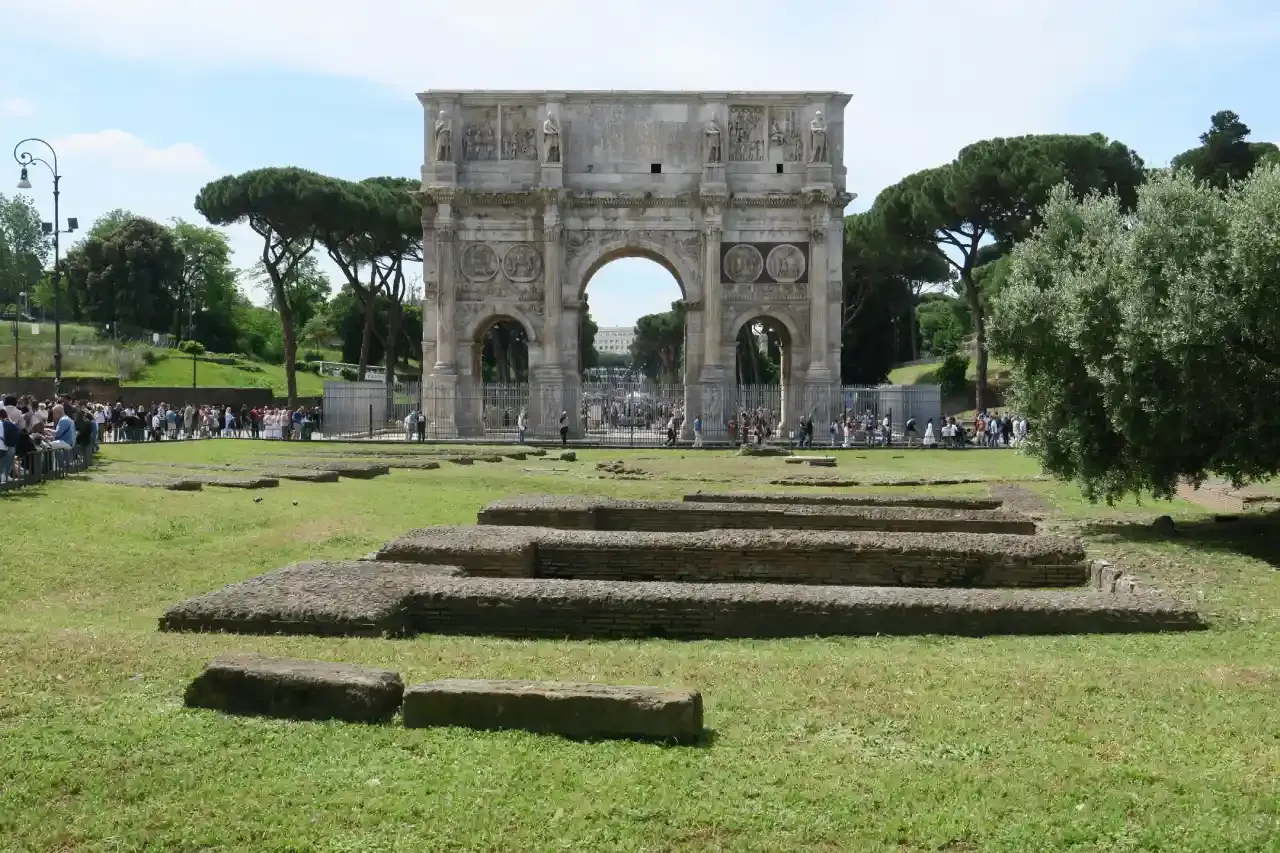
The Arch of Constantine is a triumphal monument in Rome situated between the Colosseum and the Palatine Hill. Dedicated in 315 AD, it commemorates Emperor Constantine’s victory at the Battle of the Milvian Bridge. The structure incorporates decorative elements and sculptures relocated from earlier imperial monuments to honor his reign.
Support when you need it
Our team ensuring that your experience with us is as smooth and enjoyable as possible.
Fast and online booking
Choose the best option for your needs and preferences and avoid the lines booking here.
Top attraction in Rome
The Colosseum is an iconic landmark, a piece of history, and a testament to Roman engineering.
History
In ancient Rome, to celebrate great victories they would build triumphal arches in public places, such as main squares, for residents and visitors to see. Most of them have disappeared over the centuries, but three of them still stand today. One of them is the great Arch of Constantine, a triumphal arch located in the heart of Rome.
The Arch of Constantine marks the celebration of an important military victory. In 312 AD Emperor Constantine I defeated Emperor Maxentius, who occupied Rome, at the Battle of Milvian Bridge. This victory for Constantine helped to consolidate his power and eventually led to the Roman Empire’s conversion to Christianity. The triumphal arch was erected and dedicated to Emperor Constantine I, as a gift from the Senate of Rome to award him.
The structure of the Arch of Constantine
Dimensions
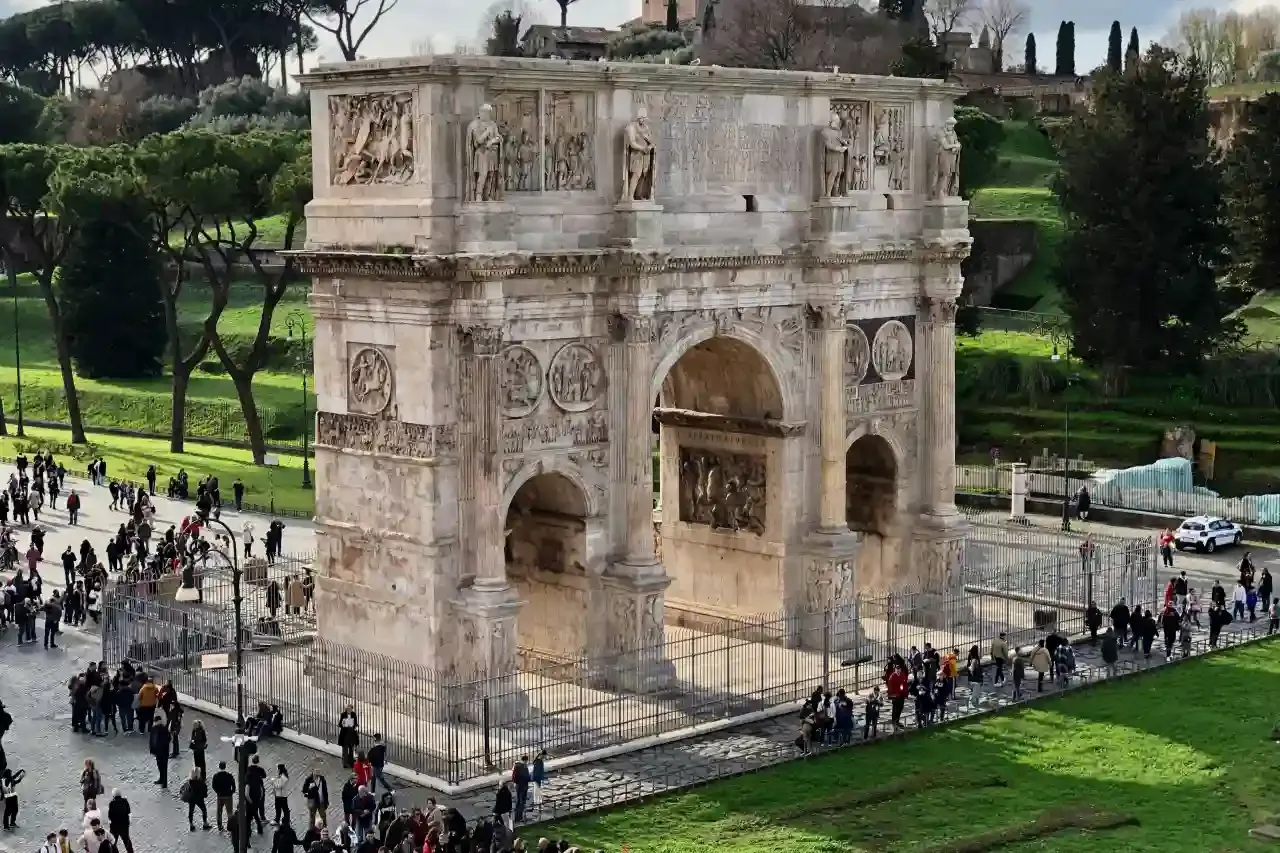
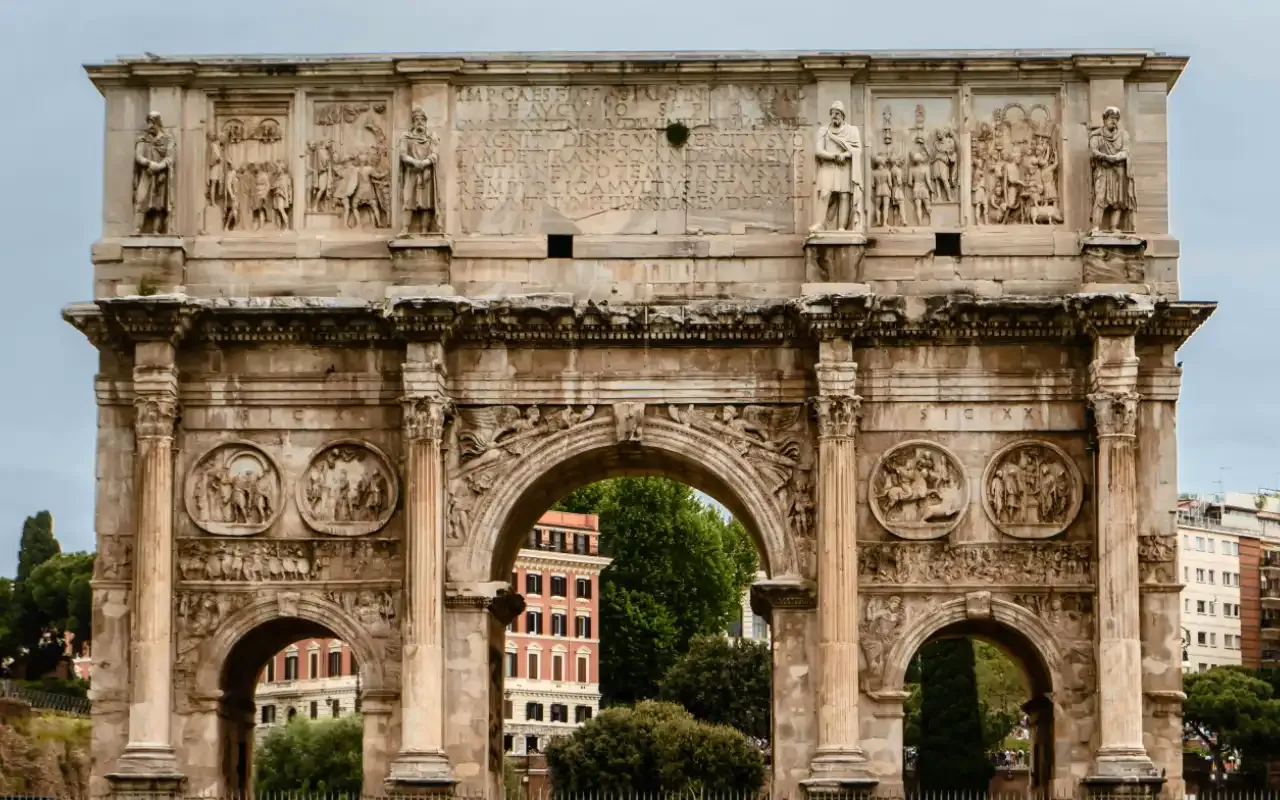
The Arch of Constantine stands about 20 meters high, 25 meters wide, and 7 meters in depth. It has three portals that punctuate the exceptional width of the arch, each one flanked by partially engaged Corinthian columns. The central opening is approximately 12 meters high, which has above two identical inscribed marble panels – one on each side – that read: “To the Emperor Caesar Flavius Constantinus, the Greatest, pious, fortunate, the Senate and people of Rome, by inspiration of divinity and his own great mind with his righteous arms on both the tyrant and his faction in one instant in rightful battle he avenged the republic, dedicated this arch as a memorial to his military victory.”
The Meta Sudans
The Meta Sudans, Latin for “sweating turning post”, was a large monumental conical fountain in ancient Rome. It was built between the Colosseum and the Temple of Venus and Roma, close to the later Arch of Constantine, at the main juncture of four regions of ancient Rome.
This structure was built between 89 and 96 AD under the Flavian emperors, shortly after the completion of the Colosseum. It functioned as a key navigational landmark, marking the spot where triumphal processions would turn left from the Via Triumphalis toward the Via Sacra to enter the Roman Forum.
Constructed with a brick and concrete core faced in marble, the fountain's presence remains visible today. Its foundations can still be seen within the circular area located directly in front of the Arch of Constantine.
Facts
- The Arch of Constantine is a triumphal arch built in ancient Rome, located next to the Colosseum that still stands today.
- It was commissioned and built in 315 AD by the Roman Senate in honor to commemorate the victory of Constantine I over Maxentius at the battle of Milvian Bridge in 312 AD.
- The arch spans the Via Triumphalis, the main road taken by the emperors when they entered the city after a victory in triumph.
- The Arch of Constantine is one of the three remaining triumphal arches made in ancient Rome.
- It’s decorated with statues and reliefs, and the frieze depicting scenes of the battle and the entry of Constantine to the city of Rome.
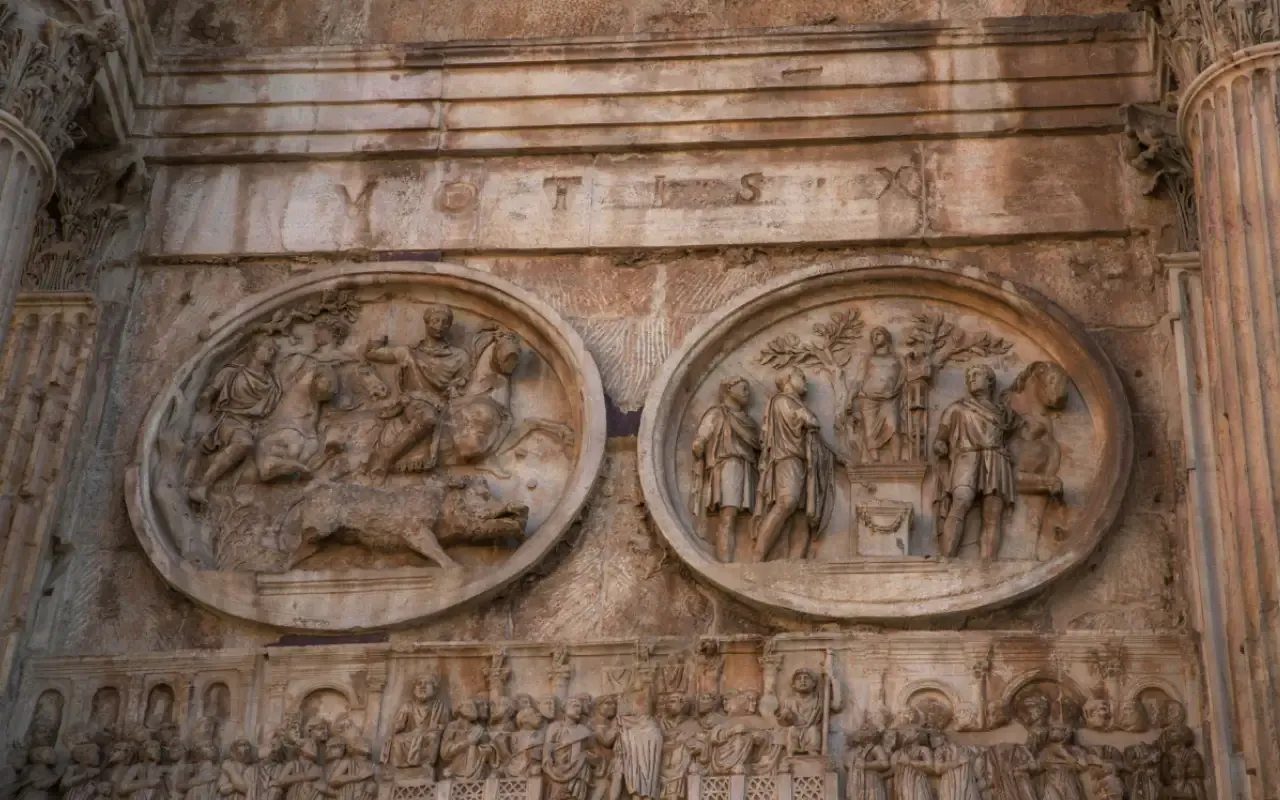
- Although it was originally built for Constantine, sculptures and statues have been incorporated over the centuries to celebrate other victories, as well, like the ones of Marcus Aurelius, and also to represent hunting and sacrifice scenes from the time of Hadrian, nearly 200 years earlier.
- Although it’s among the most famous and recognized monuments of its era, it remains to be highly controversial due to several factors, including the fact that some historians claim it was built during the reign of Maxentius because the arch is decorated with parts of older monuments and depictions of Pagan gods and goddesses, despite Constantine’s inclination for Christianity.